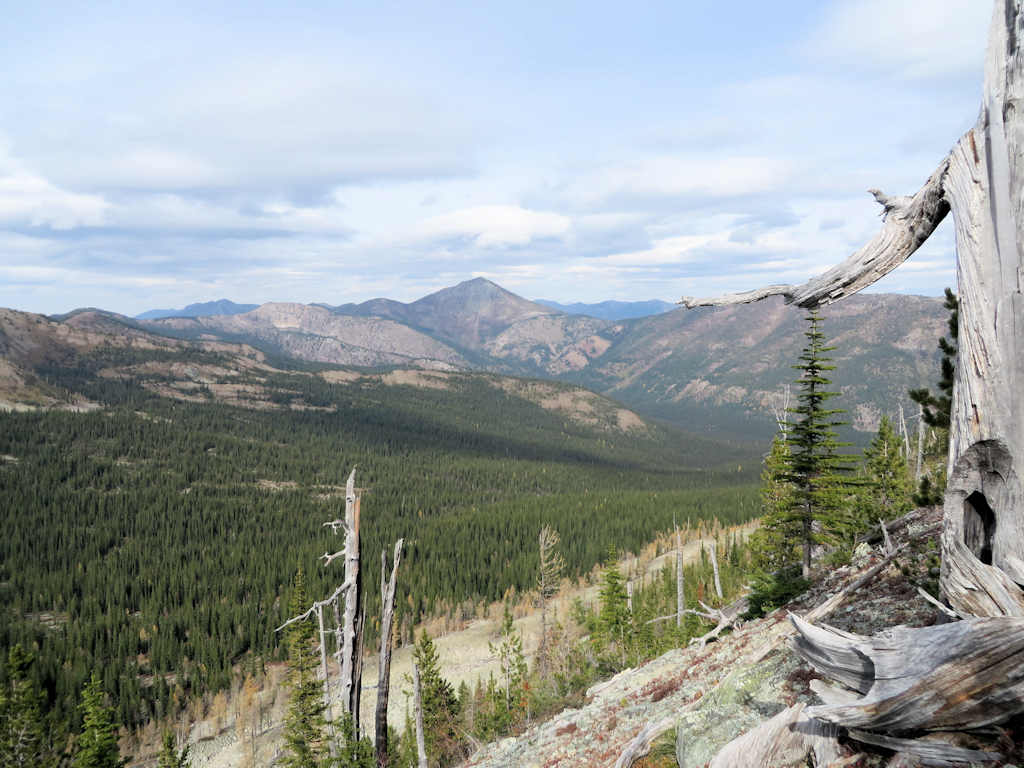
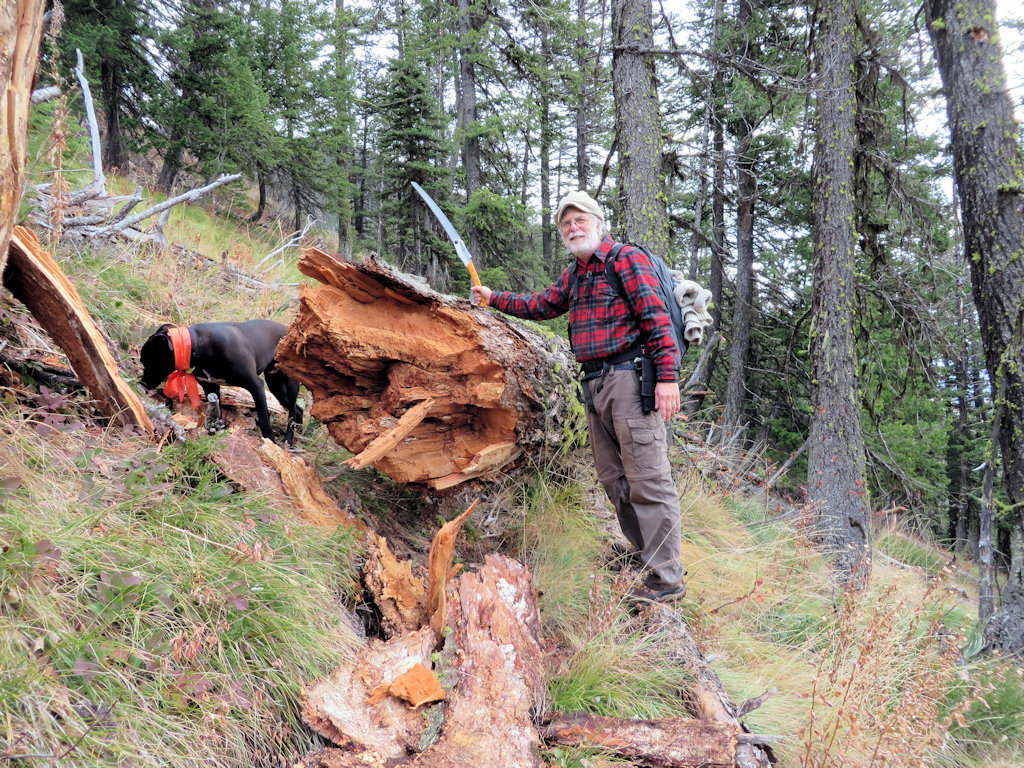
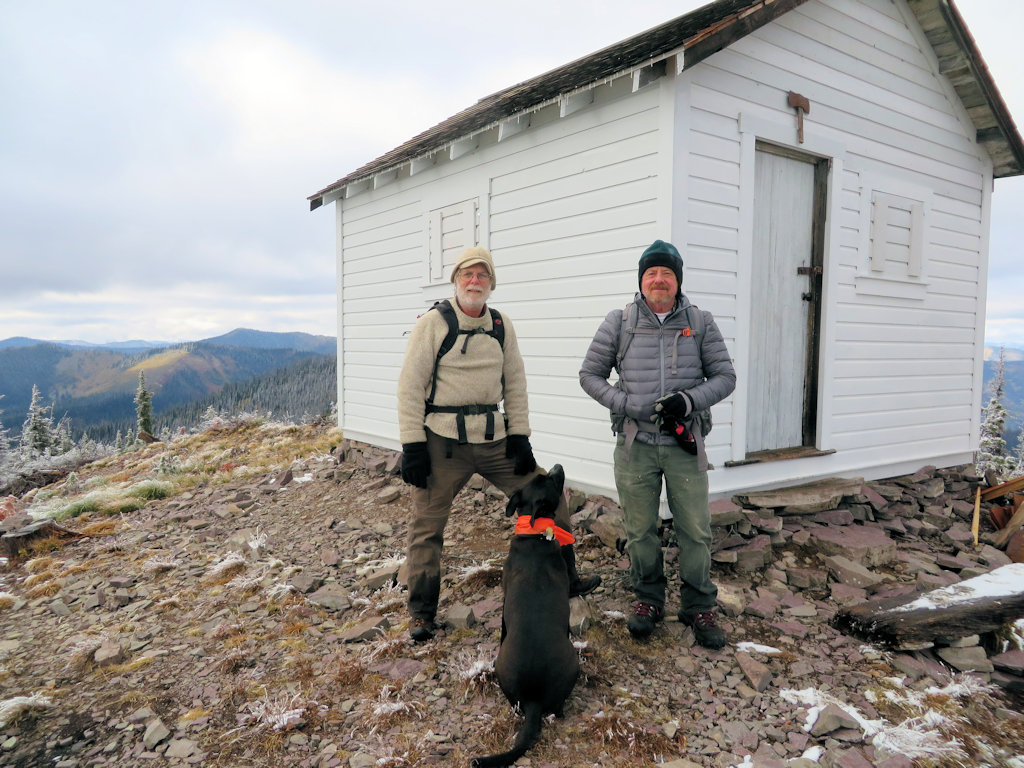
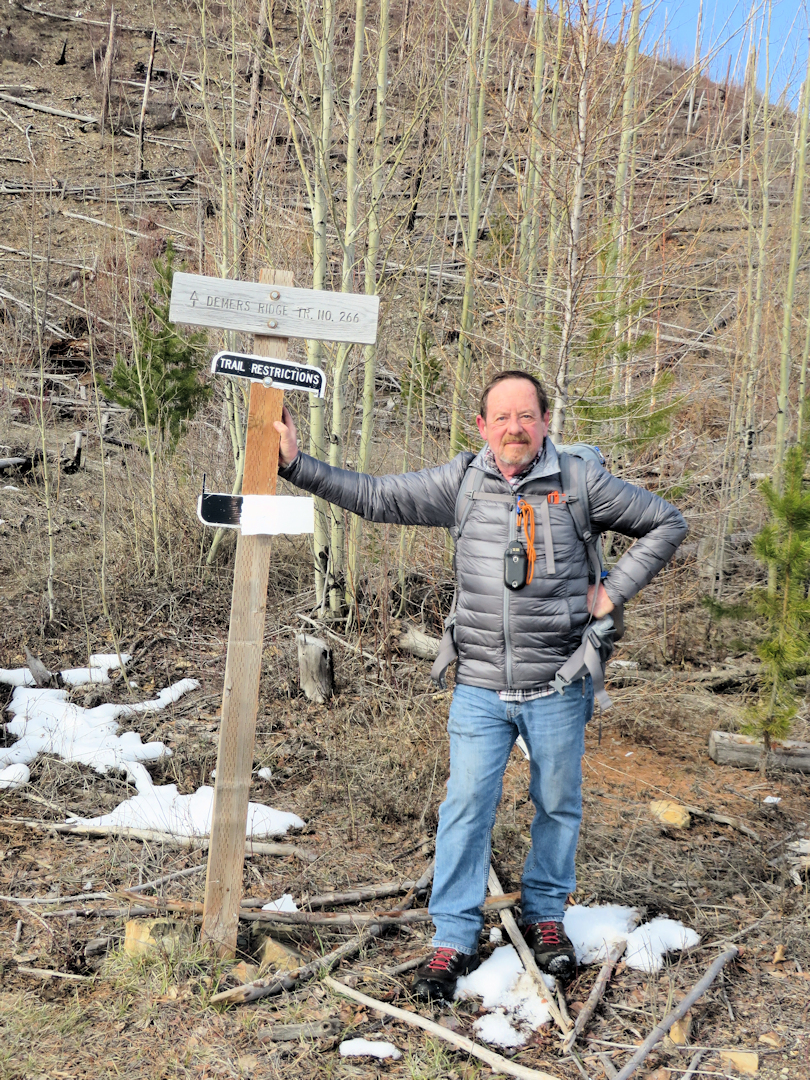
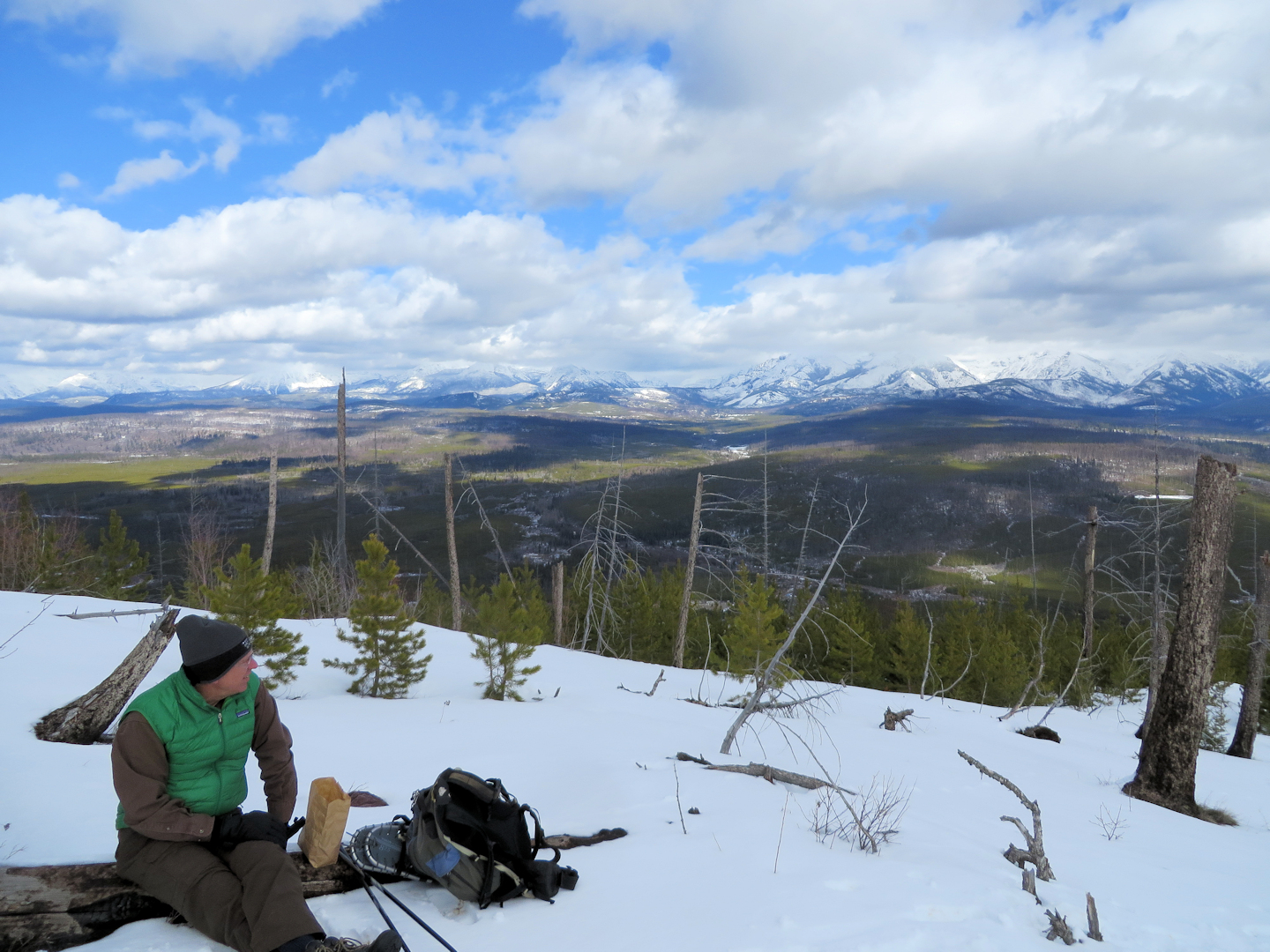
We took another slog up Glacier View Mountain via Trail 266 on Saturday, March 26. Besides encountering a couple more blow-downs in need of removal, we saw recent wolf tracks and scat. heaven knows why that wolf was coming down off Glacier View, but at least the trail was clear.
The 2016 trails season begins
No, really. We actually did a small trail project in February, not to mention a nice little ski trip.
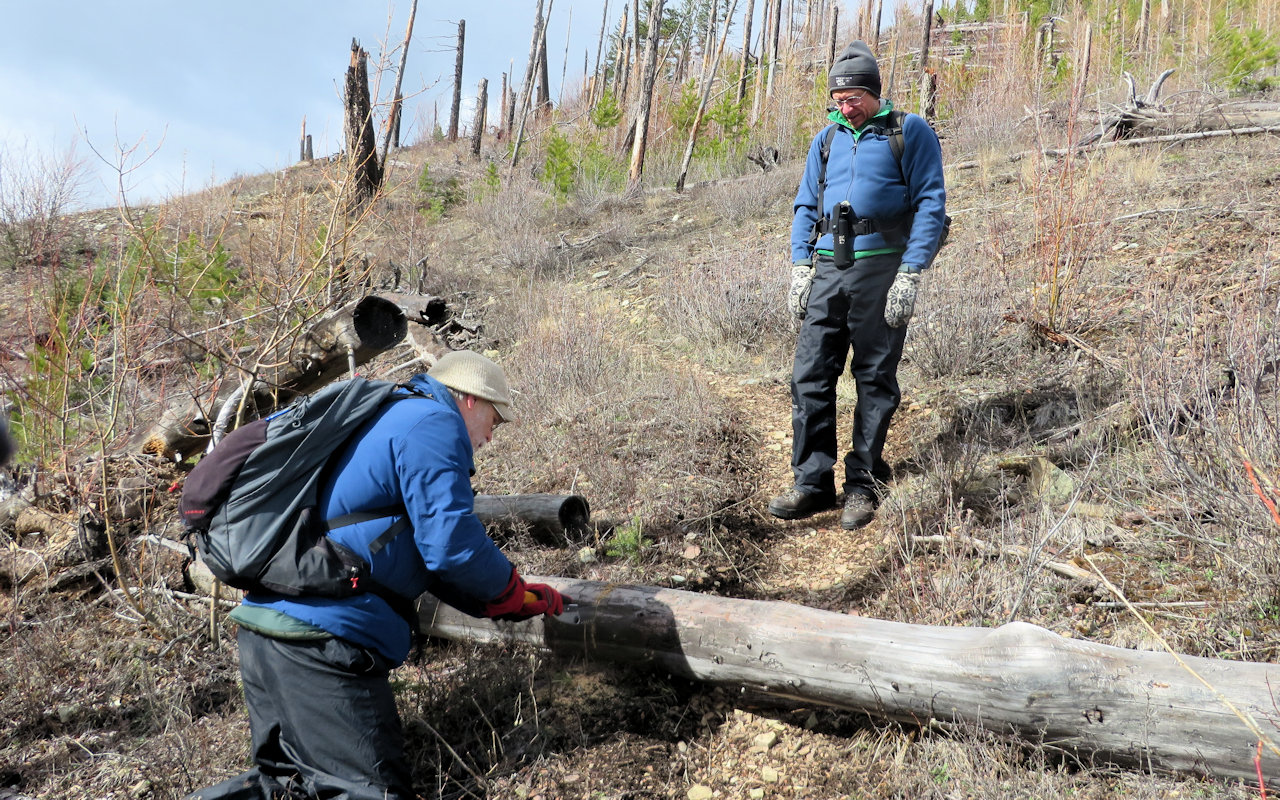
On February 23, a couple of us — myself (Bill Walker) and Greg Evans — headed up Trail 266 towards Glacier View Peak from the trailhead near the Camas Road. We removed 22 blow-downs from the first mile of trail and had lunch with a view.
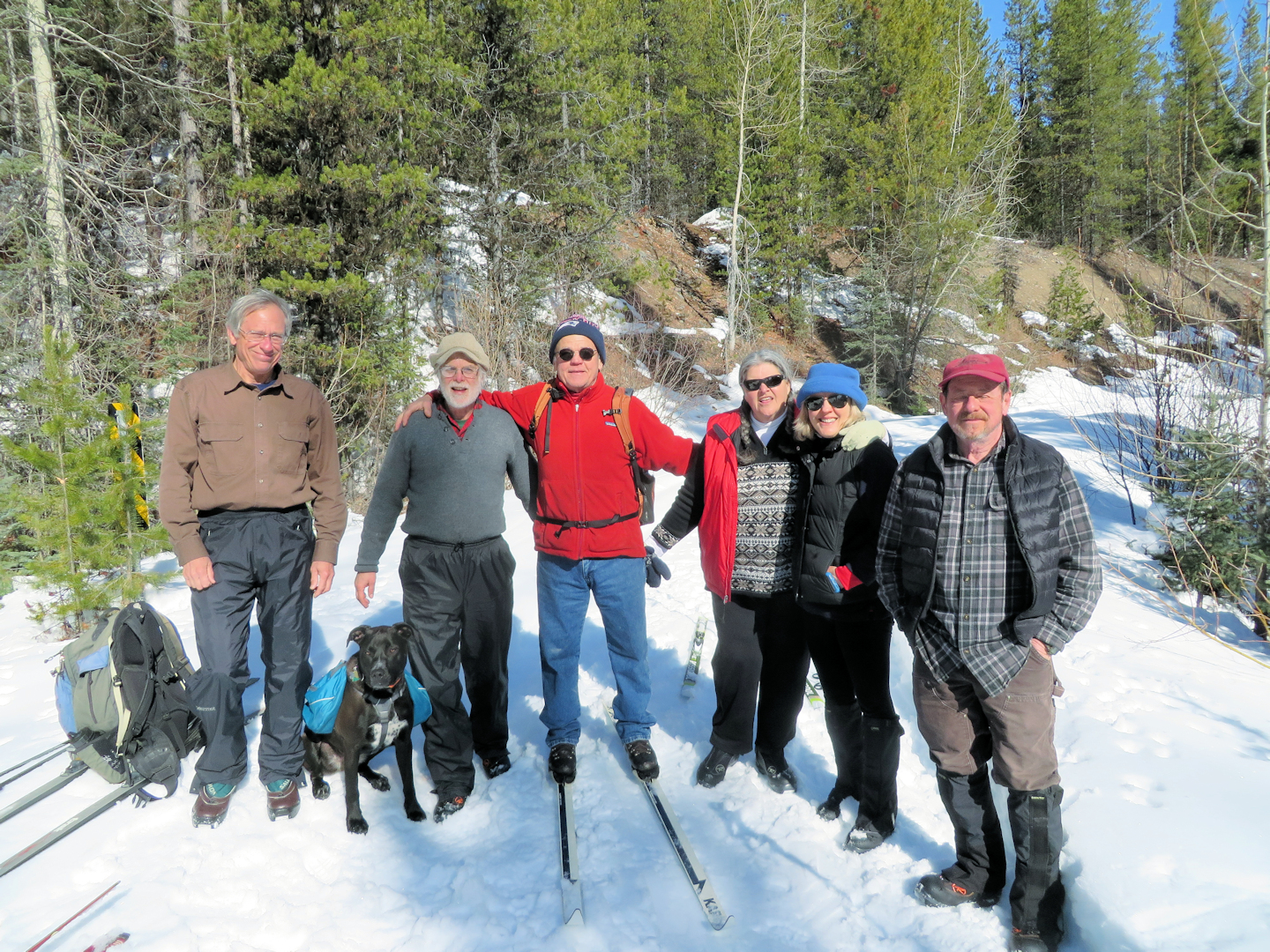
A few days later, a group of us had a pleasant ski up Road 909 from the Hay creek Road. Everyone had a good time. Upholding NFTA tradition, we cut out a couple of blow-downs on the way back.

Road 909, Hay Creek Drainage – Left to right: Greg Evans, Ceder, Randy Kenyon, John O’Hara, Joyce O’Hara, Debo Powers, Bill Walker and Rachel Peura (behind the camera)
It was a nice start to what should be a good trails season.
2015 in review
Even with a very early start to the 2015 fire season, the North Fork Trails Association was active from mid-May right through the end of October. The tinder dry forest prevented us from using any tools that might strike a spark, but we found plenty to accomplish with the one-person saws that are becoming part of our standard kit and we did quite a bit of scouting throughout the North Fork.
Here, then, are a few highlights from the 2015 trails season…
We didn’t get much snow this year so, we were able to get boots on the trail by late May. The first expedition of any size was up Trail 4 on May 26. We were up and down this trail several times throughout the year.
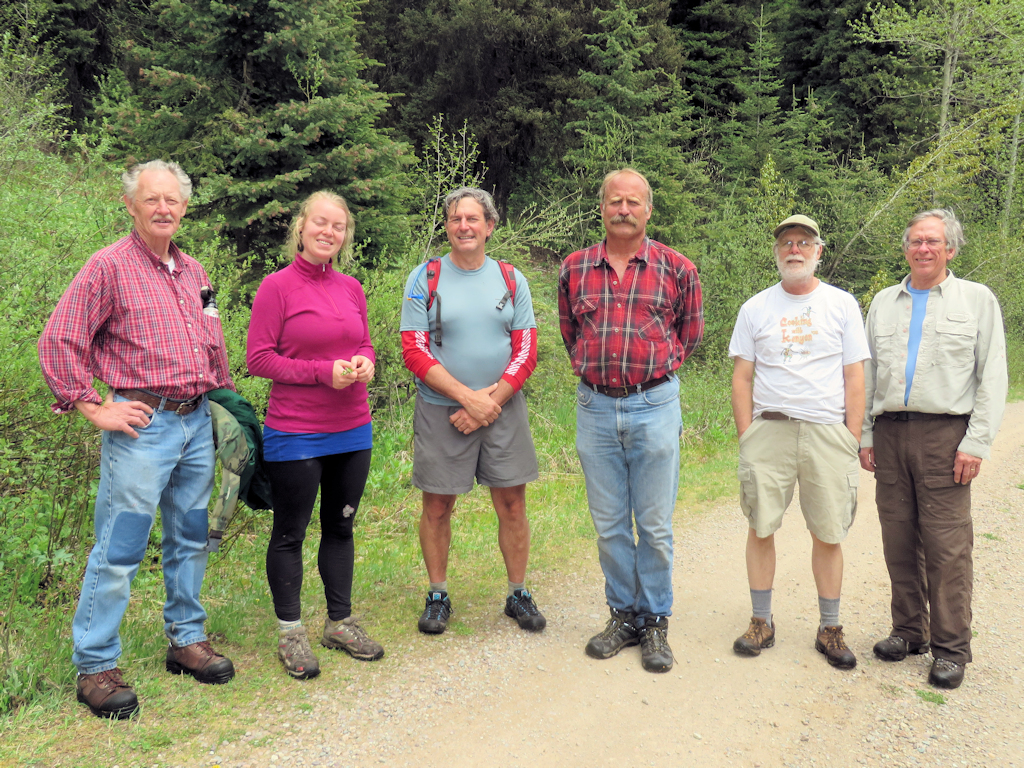
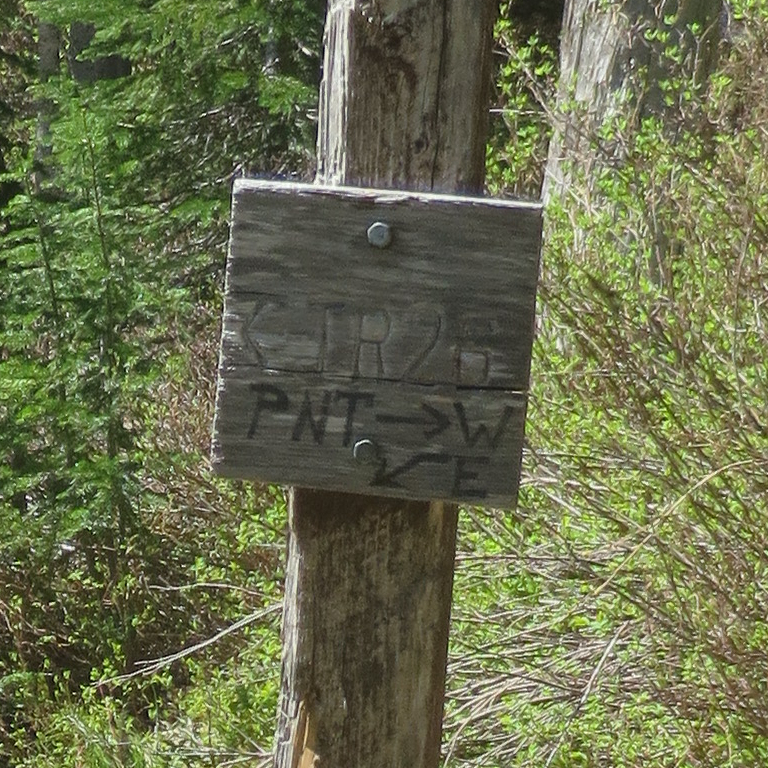
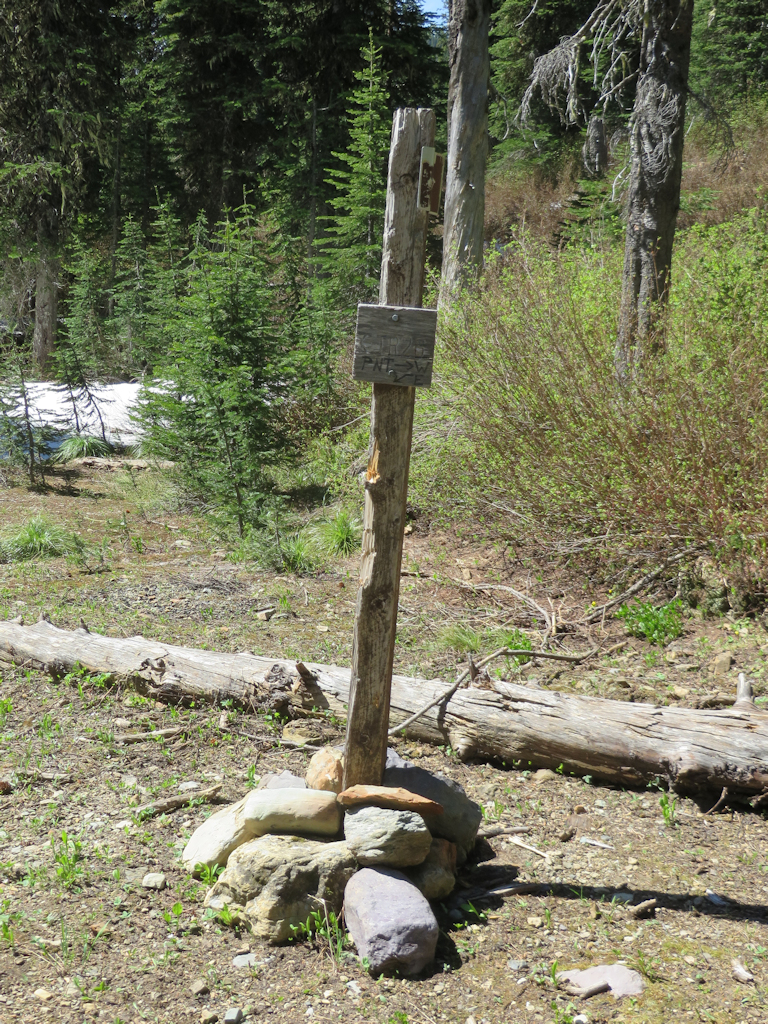
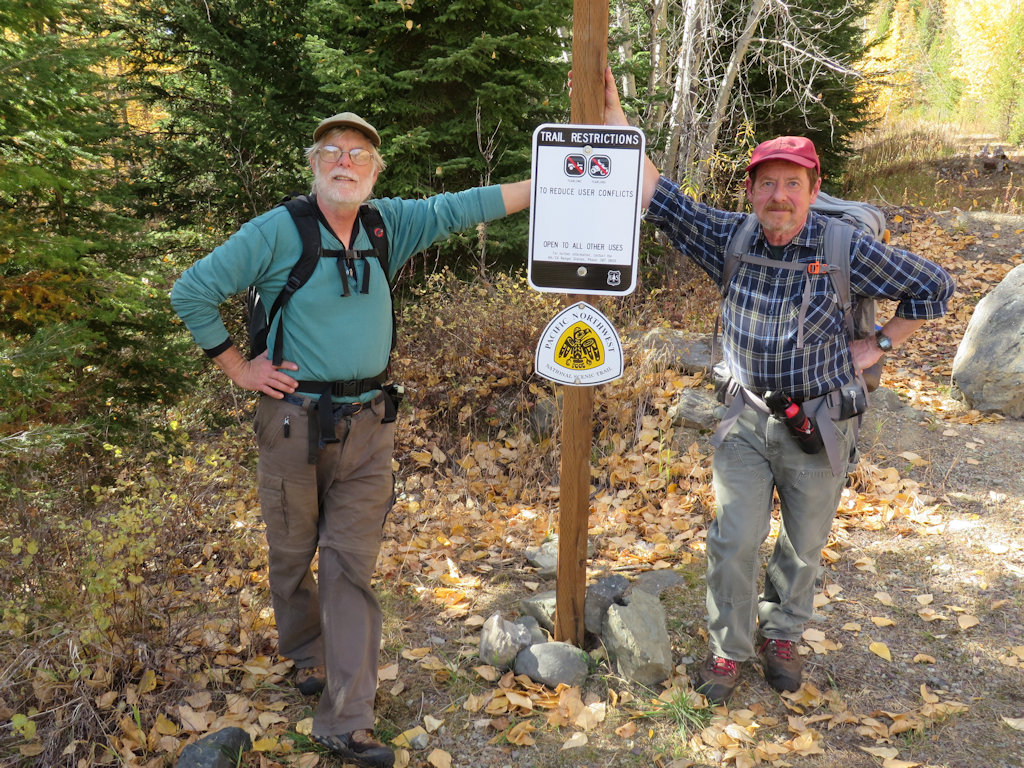
Another trail that got a lot of attention was the eastern section of the Pacific Northwest Trail where it passes through the North Fork — Trail 3 and a segment of Trail 26.
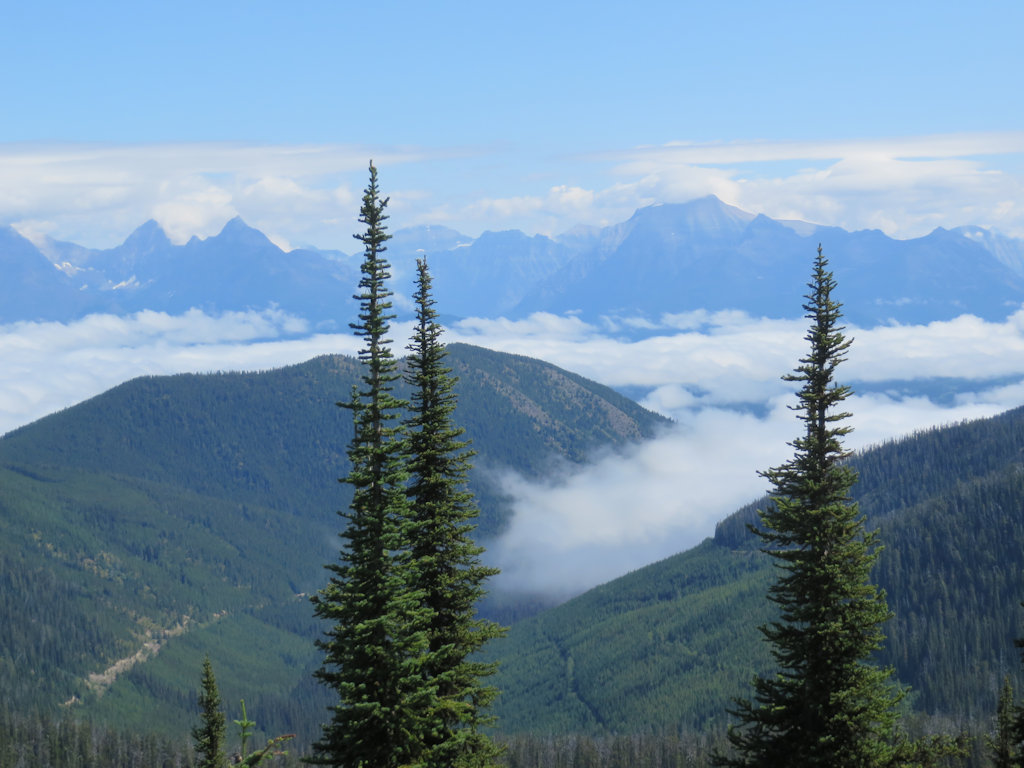
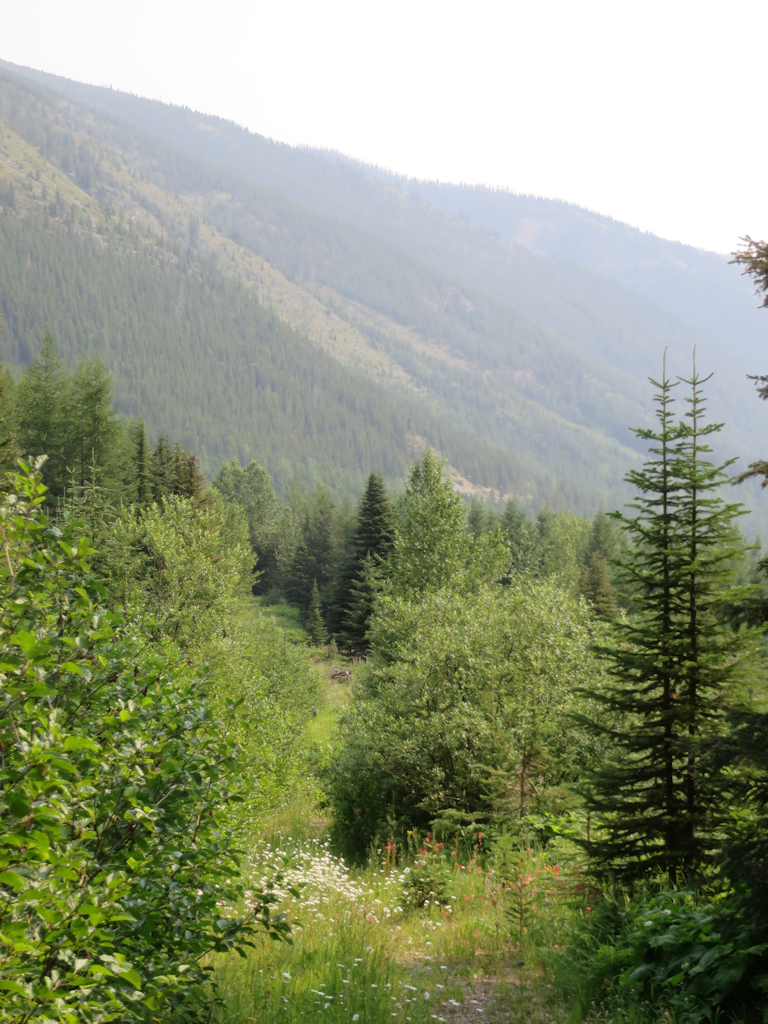
It was a very early fire season. Just as we hit our stride, the region began to get smoky. This view west along the Hay Creek drainage, was taken July 9. It got a lot worse later.
The old Cleft Rock Trail, Trail 13, got a number of visits early in the season, as we checked out several ways of accessing it. (The eastern end currently stops at private land.) There will be a lot more activity on this project in 2016.
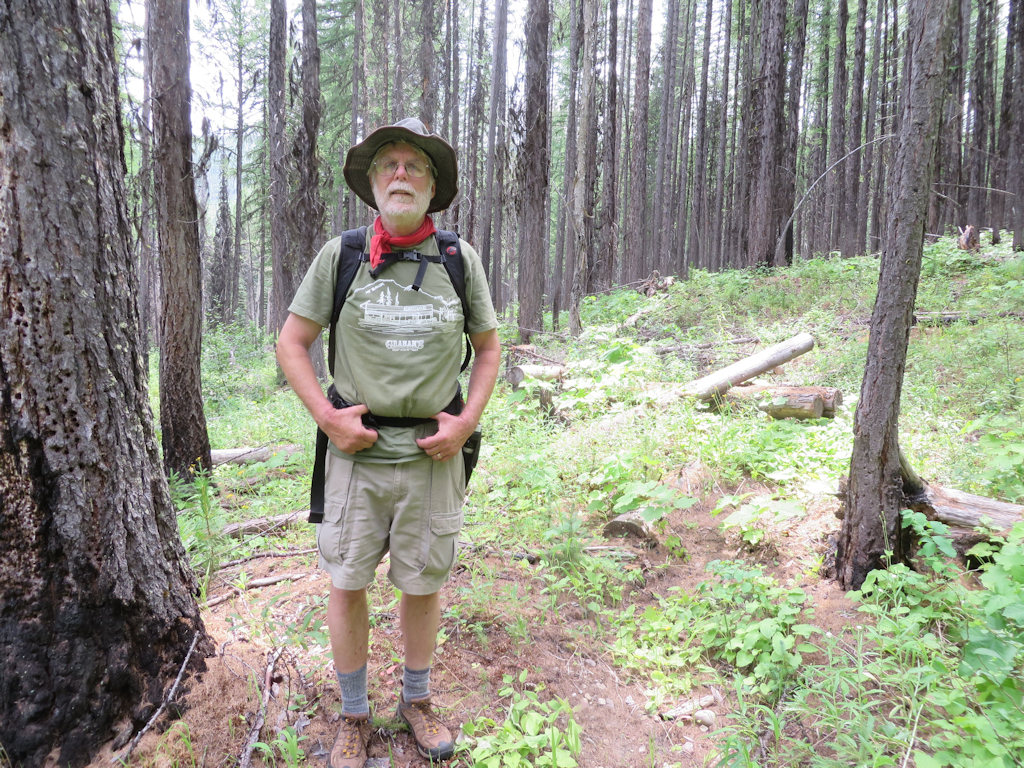
Before things got too smoky, we spent a fair amount of time in early July ensuring that Trail 2 was fixed up and ready for a “Wilderness Walks” hike scheduled for mid-July. Read about the hike here and the trail cleanup efforts here and here.
We’ll “draw the curtain of charity” over late summer, which was heavily shrouded in smoke from regional fires and dangerously dry. Besides, yours truly forgot to bring his camera.
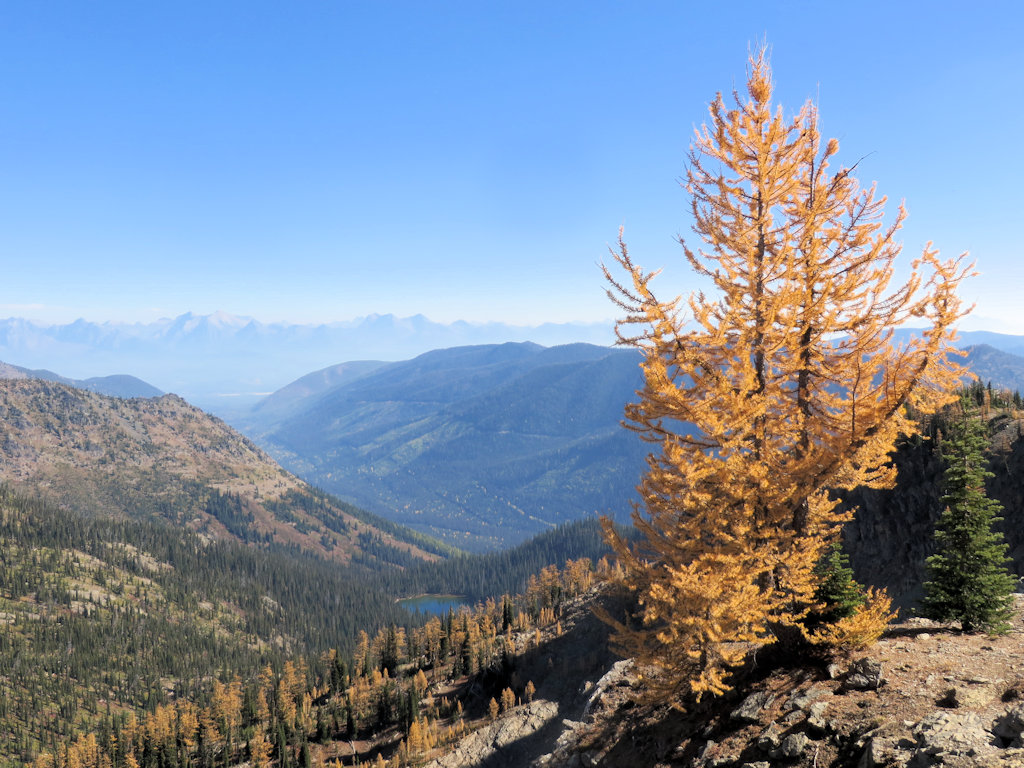
We squeezed in several late season activities, including a couple of hikes up Lake Mountain on Trail 375. The first day we went up there, the air was so clear we could see smoke rising from a wildfire near the Idaho border, almost 70 miles to the west.
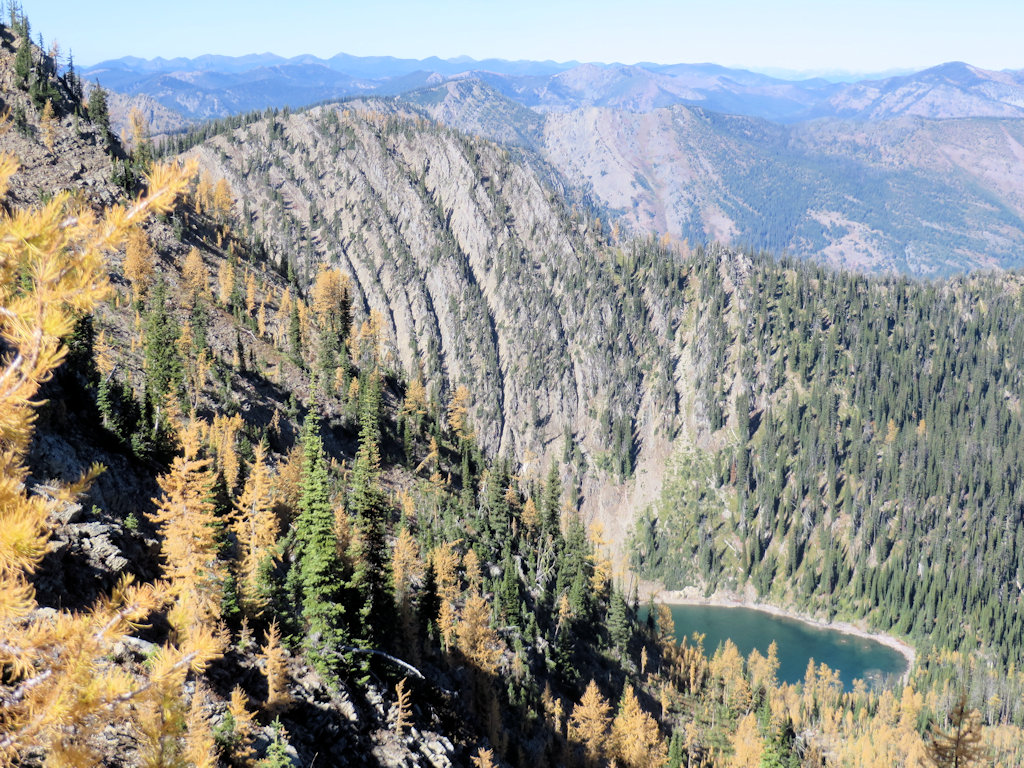
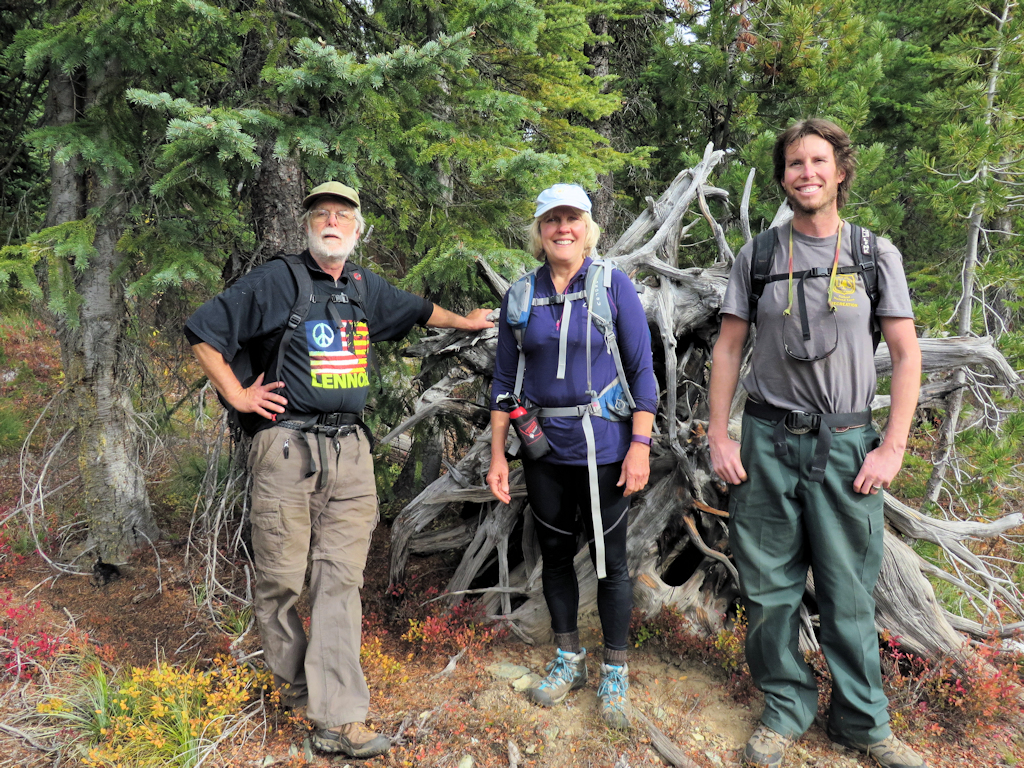
In early October we visited the Review Mountain Loop (Trails 113 and 23) a couple of times. The first trip was for our own purposes (setting additional cairns and some blow-down removal), the second was a very pleasant and productive meeting with Sean Cranmer of the U.S. Forest Service. Sean was handling trails issues this year. He took the time to drop by once the fires settled down and the smoke cleared.
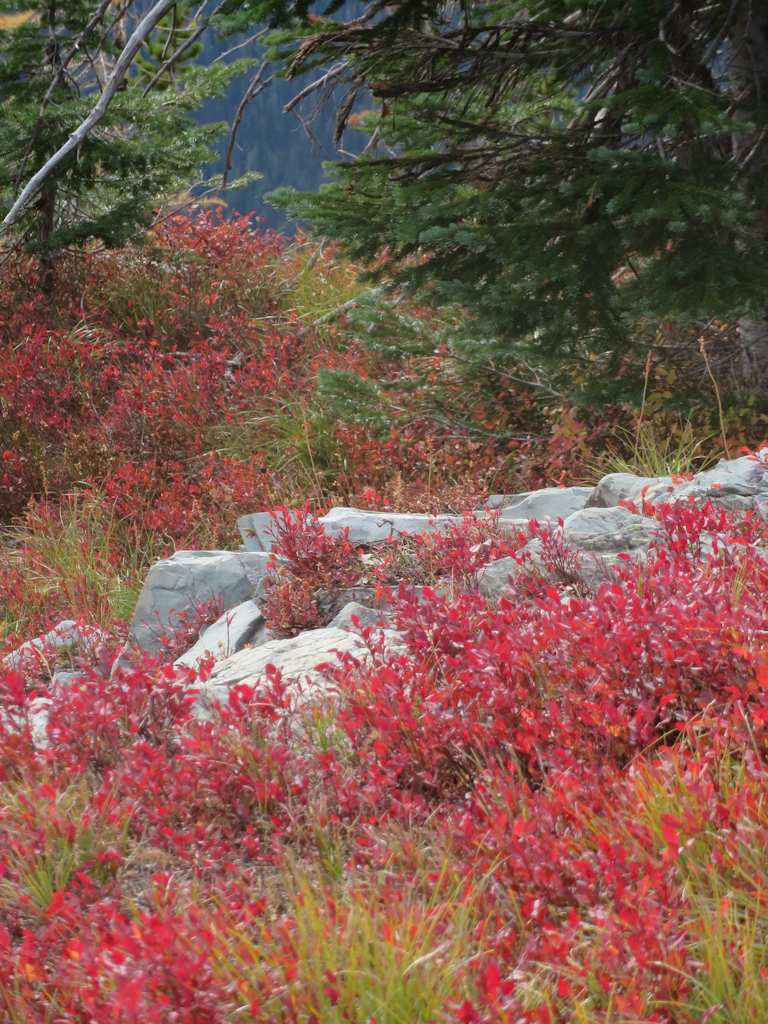
But wait, there’s more…
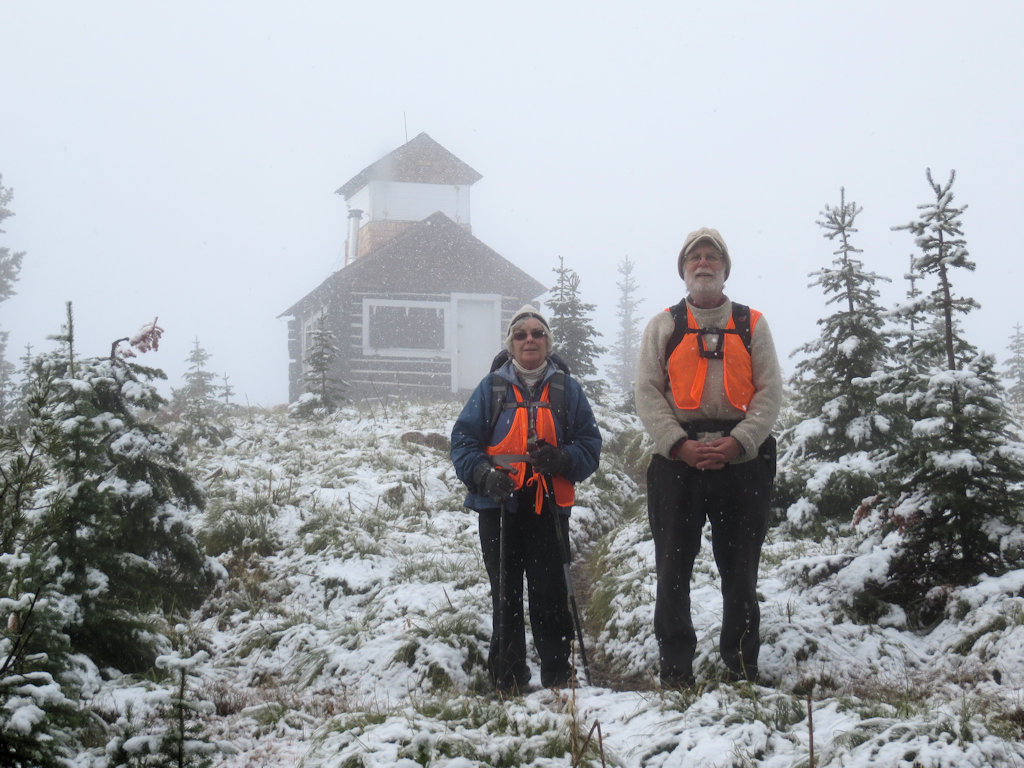
October 27 was the final trip to Hornet Lookout.
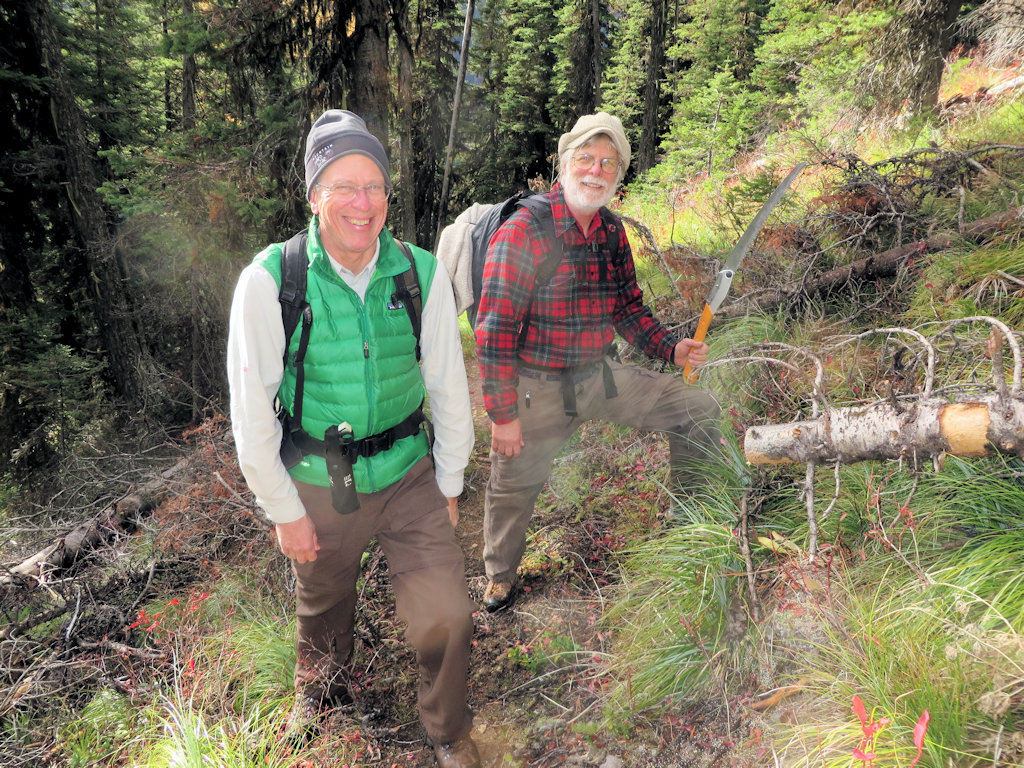
The season-ender was October 28, a last trip up Trail 239, the back door to Coal Ridge. Three of us cut out some blow-downs, excepting one that was a little big for the equipment we had on-hand, and signed the log at the Coal Ridge patrol cabin.
What about 2016? We’re already rolling. Watch this weblog for further developments.
U.S. Forest Service strategy document paints bleak picture
The Forest Service has had a conflicting set of goals for the last few decades but, for Region 1 at least, things seem to be coming to a head. And it is not good news, especially for trails . . .
A new strategy for managing public lands for recreation, heritage and wilderness paints a bleak picture of the U.S. Forest Service’s own ability to tackle the job.
“You could say this looks like a D-minus report card,” said George Bain, Forest Service Region 1 director of recreation, lands, minerals, heritage and wilderness. “To us, this is how it is. We wanted to take a good, hard look and develop a strategy for how to work in that world. We don’t have all the money we’d want. We don’t have all the workforce we’d want. We don’t have the ability to take care of everything the way we’d like. This is the landscape we’re working in. Let’s see how to address this.”
The 50-page document released last August got little notice outside the Region 1 Missoula headquarters. But it had been more than a year in the drafting, and it has been signed by Regional Forester Leanne Marten, her deputies and the supervisors of all 10 national forests that report to her.
And note this part:
“Workforce skills are also on the decline” in maintaining Region 1’s 28,000 miles of trail. Most of the five Wild and Scenic River corridors lack completed management plans.
In late January, Bain delivered further bad news to a roundtable of recreation partners – Region 1’s trail maintenance budget is taking a 30 percent cut. That’s going to be phased in with 10 percent increments during the next three years. The money was getting reallocated to places like California that have more user-days of trail use.
See also: The Northern Region Sustainable Recreation, Heritage, Wilderness (RHW) Strategy 2015-2020 (1.68MB, PDF)
Back Country Horsemen of Montana packing class scholarship available; donations needed
Greg Schatz just sent us the following information. If I was younger, I’d jump all over this . . .
The Back Country Horsemen of Montana is offering a full scholarship to the packing class taught and donated by Bob Marshall Wilderness Outfitters. The class is June 11-15 and the winner is due at the North Fork of the Blackfoot trailhead at 10 am June 11. We are expecting that the winning applicant will be in the 18-25 age range but anyone is welcome to apply.
The packing class scholarship application, sponsored by BCHMT and Bob Marshall Wilderness Outfitters is online at http://www.bchmt.org/flatbch/application.html. There are instructions on the application for where to send it when it is complete.
The deadline for applying is March 31.
For additional information, see the packing class poster (PDF, 199KB).
Also note that the Back Country Horsemen of Montana needs donations to help defray the cost of this scholarship program. The packer apprentice program will cost a total of $1,640 for this coming summer and they are looking for donations to make sure this project can be successful. They welcome any amount of donation. You can donate on-line or you can send a check with “packer apprentice” in the memo to BMWF, PO Box 190688, Hungry Horse MT 59919.
There are more details of the project and the costs associated with it, in the program poster (PDF, 290KB).
Calendar updated through October
We’ve updated the calendar through the end of October, which is likely the end of the hiking season as well. As usual, there’s always the potential for the occasional short-notice event to be wedged in there, too.